

#精度调优示例
本章以一个实际精度调优的例子介绍整个流程,请确保先看完精度调优指导章节,了解相关的理论知识和工具用法。
#模型结构和量化配置检查
在对模型做完 QAT 相关的适配和改造后,运行程序,运行目录下会生成 model_check_result.txt,先检查这个文件。
#算子融合检查
首先查看算子融合的情况,发现有少量算子未按照预期融合。
Fusable modules are listed below:
name                                              type
------------------------------------------------  --------------------------------------------------------------------------
model.view_transformation.input_proj.0.0          <class 'horizon_plugin_pytorch.nn.qat.conv2d.Conv2d'>
model.view_transformation._generated_add_0        <class 'horizon_plugin_pytorch.nn.qat.functional_modules.FloatFunctional'>

name                                              type
------------------------------------------------  --------------------------------------------------------------------------
model.view_transformation.input_proj.1.0          <class 'horizon_plugin_pytorch.nn.qat.conv2d.Conv2d'>
model.view_transformation._generated_add_2        <class 'horizon_plugin_pytorch.nn.qat.functional_modules.FloatFunctional'>

name                                              type
------------------------------------------------  --------------------------------------------------------------------------
model.view_transformation.input_proj.2.0          <class 'horizon_plugin_pytorch.nn.qat.conv2d.Conv2d'>
model.view_transformation._generated_add_4        <class 'horizon_plugin_pytorch.nn.qat.functional_modules.FloatFunctional'>

name                                              type
------------------------------------------------  --------------------------------------------------------------------------
model.view_transformation.input_proj.3.0          <class 'horizon_plugin_pytorch.nn.qat.conv2d.Conv2d'>
model.view_transformation._generated_add_6        <class 'horizon_plugin_pytorch.nn.qat.functional_modules.FloatFunctional'>

name                                              type
------------------------------------------------  --------------------------------------------------------------------------
model.view_transformation.input_proj.4.0          <class 'horizon_plugin_pytorch.nn.qat.conv2d.Conv2d'>
model.view_transformation._generated_add_8        <class 'horizon_plugin_pytorch.nn.qat.functional_modules.FloatFunctional'>

name                                              type
------------------------------------------------  --------------------------------------------------------------------------
model.view_transformation.input_proj.5.0          <class 'horizon_plugin_pytorch.nn.qat.conv2d.Conv2d'>
model.view_transformation._generated_add_10       <class 'horizon_plugin_pytorch.nn.qat.functional_modules.FloatFunctional'>
查看 model.view_transformation.input_proj 模块。
class BevFormer(BaseModule):
    def process_input(self, feats):
        ...
        for cam_idx in range(num_cameras):
            # 因动态代码块的存在,需要使用 dynamic_block 标注才能正常融合
            with Tracer.dynamic_block(self, "bevformer_process_input"):
                src = cur_fpn_lvl_feat[cam_idx]
                bs, _, h, w = src.shape
                spatial_shape = (h, w)
                spatial_shapes.append(spatial_shape)
                src = self.input_proj[str(cam_idx)](src)
                src = src + self.cams_embeds[cam_idx][None, :, None, None]
                src = src + self.level_embeds[feat_idx][None, :, None, None]
                src = src.flatten(2).transpose(1, 2)  # B, C, H, W --> B, C, H*W --> B, H*W, C
src_flatten.append(src)#共享模块检查
接着我们进行共享模块的检查,对于 called times > 1 的模块需要拆开。
Each module called times:
name                                                                                       called times
---------------------------------------------------------------------------------------  --------------
...
model.map_head.sparse_head.decoder.gen_sineembed_for_position.div.reciprocal                          8
model.map_head.sparse_head.decoder.gen_sineembed_for_position.div.mul                                 8
model.map_head.sparse_head.decoder.gen_sineembed_for_position.sin_model.sin                           8
model.map_head.sparse_head.decoder.gen_sineembed_for_position.cos_model.cos                           8
model.map_head.sparse_head.decoder.gen_sineembed_for_position.stack                                   8
model.map_head.sparse_head.decoder.gen_sineembed_for_position.cat                                     4
model.map_head.sparse_head.decoder.gen_sineembed_for_position.mul                                     8
model.map_head.sparse_head.decoder.gen_sineembed_for_position.dim_t_quant                             4
...
calibration 或 qat 训练后发现精度比较差,使用 debug 工具时可以在逐层比较中观察这些共享算子的统计信息,base model 为浮点模型,analy model 为校准模型。以 model.map_head.sparse_head.decoder.gen_sineembed_for_position.div.mul 的其中两次调用为例,量化表示的最大值为 128 * 0.0446799 ≈ 5.719,在第一次使用中,输出范围明显小于 [-5.719, 5.719],误差较小, 第二次使用中,输出范围超出 [-5.719, 5.719],数值被截断,产生了较大误差。两次数值范围的差异也导致统计出的 scale 不准确。
+------+-------------------------------------------------------------------------------+-----------------------------------------------------------------------------------+-----------------------------------------------------------------------------+--------------------------------+---------------+------------+------------------+-------------------+------------------+-------------------+
|      | mod_name                                                                      | base_op_type                                                                      | analy_op_type                                                               | shape                          | quant_dtype   |     qscale |   base_model_min |   analy_model_min |   base_model_max |   analy_model_max |
|------+-------------------------------------------------------------------------------+-----------------------------------------------------------------------------------+-----------------------------------------------------------------------------+--------------------------------+---------------+------------+------------------+-------------------+------------------+-------------------+
...
| 1227 | model.map_head.sparse_head.decoder.gen_sineembed_for_position.div             | horizon_plugin_pytorch.nn.div.Div                                                 | horizon_plugin_pytorch.nn.qat.functional_modules.FloatFunctional.mul        | torch.Size([1, 1600, 128])     | qint8         |  0.0446799 |        0.0002146 |         0.0000000 |        4.5935526 |         4.5567998 |
...
| 1520 | model.map_head.sparse_head.decoder.gen_sineembed_for_position.div             | horizon_plugin_pytorch.nn.div.Div                                                 | horizon_plugin_pytorch.nn.qat.functional_modules.FloatFunctional.mul        | torch.Size([1, 1600, 128])     | qint8         |  0.0446799 |        0.0000000 |         0.0000000 |        6.2831225 |         5.7190272 |
...
查看 model.map_head.sparse_head.decoder.gen_sineembed_for_position 模块。
class AnchorDeformableTransformerDecoder(nn.Module):
    def __init__(self, decoder_layer, num_layers, return_intermediate=False):
        ...
        # 构造不同的 gen_sineembed_for_position,拆开使用。
        for i in range(len(self.layers)):
            self.add_module(
                "gen_sineembed_for_position%d" % (i), PositionEmbedding()
            )

    def forward(...):
        ...
        for lid, layer in enumerate(self.layers):
            ref_shape = reference_points.shape
            assert ref_shape[-1] == 2
            reference_points_reshape = reference_points.view(ref_shape[0], -1, 2)
            query_sine_embed = getattr(self, "gen_sineembed_for_position%d" % (lid))(reference_points_reshape)
...#QConfig 正确性检查
input dtype statistics:
+----------------------------------------------------------------------------+-----------------+---------+----------+----------+
| module type                                                                |   torch.float32 |   qint8 |   qint16 |   qint32 |
|----------------------------------------------------------------------------+-----------------+---------+----------+----------|
| <class 'horizon_plugin_pytorch.nn.qat.stubs.QuantStub'>                    |             290 |      15 |        0 |        0 |
| <class 'horizon_plugin_pytorch.nn.qat.conv2d.ConvReLU2d'>                  |               0 |       6 |        0 |        0 |
| <class 'horizon_plugin_pytorch.nn.qat.conv2d.Conv2d'>                      |               0 |     228 |        0 |        0 |
| <class 'horizon_plugin_pytorch.nn.qat.gelu.GELU'>                          |               0 |      63 |        0 |        0 |
| <class 'horizon_plugin_pytorch.nn.qat.functional_modules.FloatFunctional'> |               3 |     425 |      725 |      140 |
| <class 'horizon_plugin_pytorch.nn.qat.batchnorm.BatchNorm2d'>              |               0 |       9 |        0 |        0 |
| <class 'horizon_plugin_pytorch.nn.qat.linear.Linear'>                      |               5 |     117 |        9 |       72 |
| <class 'horizon_plugin_pytorch.nn.qat.segment_lut.SegmentLUT'>             |               0 |      64 |      125 |        0 |
| <class 'torch.nn.modules.dropout.Dropout'>                                 |               0 |      53 |        0 |        0 |
| <class 'horizon_plugin_pytorch.nn.qat.linear.LinearReLU'>                  |               1 |      17 |        0 |       28 |
| <class 'horizon_plugin_pytorch.nn.qat.conv_transpose2d.ConvTranspose2d'>   |               0 |       1 |        0 |        0 |
| <class 'horizon_plugin_pytorch.nn.qat.relu.ReLU'>                          |               0 |       8 |        0 |       56 |
| <class 'horizon_plugin_pytorch.nn.qat.linear.LinearAdd'>                   |               0 |       4 |        0 |        4 |
| <class 'horizon_plugin_pytorch.nn.qat.stubs.DeQuantStub'>                  |               0 |       8 |        0 |        4 |
| total                                                                      |             299 |    1018 |      859 |      304 |
+----------------------------------------------------------------------------+-----------------+---------+----------+----------+

output dtype statistics:
+----------------------------------------------------------------------------+-----------------+---------+----------+----------+
| module type                                                                |   torch.float32 |   qint8 |   qint16 |   qint32 |
|----------------------------------------------------------------------------+-----------------+---------+----------+----------|
| <class 'horizon_plugin_pytorch.nn.qat.stubs.QuantStub'>                    |               0 |     123 |      182 |        0 |
| <class 'horizon_plugin_pytorch.nn.qat.conv2d.ConvReLU2d'>                  |               0 |       6 |        0 |        0 |
| <class 'horizon_plugin_pytorch.nn.qat.conv2d.Conv2d'>                      |               0 |     228 |        0 |        0 |
| <class 'horizon_plugin_pytorch.nn.qat.gelu.GELU'>                          |               0 |      63 |        0 |        0 |
| <class 'horizon_plugin_pytorch.nn.qat.functional_modules.FloatFunctional'> |               0 |     341 |      716 |       64 |
| <class 'horizon_plugin_pytorch.nn.qat.batchnorm.BatchNorm2d'>              |               0 |       9 |        0 |        0 |
| <class 'horizon_plugin_pytorch.nn.qat.linear.Linear'>                      |               0 |      85 |       18 |      100 |
| <class 'horizon_plugin_pytorch.nn.qat.segment_lut.SegmentLUT'>             |               0 |      55 |      134 |        0 |
| <class 'torch.nn.modules.dropout.Dropout'>                                 |               0 |      53 |        0 |        0 |
| <class 'horizon_plugin_pytorch.nn.qat.linear.LinearReLU'>                  |               0 |      18 |        0 |       28 |
| <class 'horizon_plugin_pytorch.nn.qat.conv_transpose2d.ConvTranspose2d'>   |               0 |       1 |        0 |        0 |
| <class 'horizon_plugin_pytorch.nn.qat.relu.ReLU'>                          |               0 |       8 |        0 |       56 |
| <class 'horizon_plugin_pytorch.nn.qat.linear.LinearAdd'>                   |               0 |       4 |        0 |        0 |
| <class 'horizon_plugin_pytorch.nn.qat.stubs.DeQuantStub'>                  |              12 |       0 |        0 |        0 |
| total                                                                      |              12 |     994 |     1050 |      248 |
+----------------------------------------------------------------------------+-----------------+---------+----------+----------+

Each layer out qconfig:
+---------------------------------------------------------------------------------------------+----------------------------------------------------------------------------+--------------------------------------------------------------------------------------------------------------------------------------------------------------------------------------------------------------------------------------------------+-----------------+-------------------+--------------+
| Module Name                                                                                 | Module Type                                                                | Input dtype                                                                                                                                                                                                                                      | out dtype       | ch_axis           | observer     |
|---------------------------------------------------------------------------------------------+----------------------------------------------------------------------------+--------------------------------------------------------------------------------------------------------------------------------------------------------------------------------------------------------------------------------------------------+-----------------+-------------------+--------------|
...
| model.obstacle_head.reg_branches.0.0                                                        | <class 'horizon_plugin_pytorch.nn.qat.linear.Linear'>                      | ['qint8']                                                                                                                                                                                                                                        | ['qint32']      | -1                | MixObserver  |
...
| model.obstacle_head.reg_out_dequant0                                                        | <class 'horizon_plugin_pytorch.nn.qat.stubs.DeQuantStub'>                  | ['qint8']                                                                                                                                                                                                                                        | [torch.float32] | qconfig = None    |              |
存在如下问题:
-
存在 qint32 输出的算子。高精度输出体现在这里的表格中是 torch.float32,并不是 qint32,应该是 qconfig 配置错误。需修改 model.obstacle_head.reg_branches.0.0 的 qconfig 配置。
-
DequantStub 存在 qint8 输入,说明有几处可能未高精度输出。模板只支持 dequant 前的 GEMM 类算子自动高精度输出,需要排查这些 dequant 前是否为 GEMM 类算子。
-
除 quant 和 dequant 外,少量算子有 fp32 输入,说明有几处可能缺少 quant 节点。如果编译模型,会发现模型并不是全一段,有部分算子被退回 cpu,可以在每一层的详细输入输出类型中看出是哪个算子,并插入 quantstub。
#混合精度调优
整个流程首先进行全 int16 精度调优,此阶段用于确认模型的精度上限,排查工具使用问题和量化不友好模块。在确认全 int16 精度满足需求后,进行全 int8 精度调优。如果精度不达标则进行 int8 / int16 混合精度调优,在全 int8 的基础上逐步增加 int16 的比例,该阶段需要在精度和性能间做权衡,在满足精度的前提下,找出性能尽可能好的量化配置。
#全 INT16 精度调优
| 分支 | float | 目标(损失 < 1%) | 全 int16 calibration |
|---|---|---|---|
| 动态 | 73.6 | 72.864 | 0 |
| 静态 | 55.5 | 54.945 | 0 |
第一次校准,精度崩溃。正常情况下,全 int16 量化方式不会导致精度崩溃,需要针对造成掉点的输出进行精度 debug,这里静态和动态分支的输出任意取一个做如下改造。这里的示例加上了部分后处理(sigmoid),并且只针对静态分支(map)的最后一层输出做 debug。
class BevNet(pl.LightningModule):
    def forward(self, batch):
        ...
        # return image, calibration, gt_dict, mask_dict, pred_dict
        # 只针对掉点的输出 debug。针对全部输出 debug 也可以,但没有针对性,速度也会慢一点
        return pred_dict['map']['preds']['layer_3']

class MapQRHead(BaseModule):
    def forward_branch(self, hs, init_reference, inter_references):
        outputs = []
        for lvl in range(hs.shape[0]):
            ...
            cls_out = getattr(self, "cls_out_dequant%d" % (lvl))(self.cls_branches[lvl](hs[lvl]))
            pts_out = getattr(self, "pts_out_dequant%d" % (lvl))(self.pts_branches[lvl](hs[lvl])).view(bs, -1, 2)
            # 这个属于后处理逻辑,虽然放在 dequant 之后,但精度 debug 也要加上
            pts_out = pts_out.sigmoid()
            pts_out = pts_out.view(bs, self.num_polyline, self.num_pts_per_polyline, -1)
            y = torch.cat([cls_out, pts_out, attr_out[0], attr_out[1], attr_out[2], attr_out[3], attr_out[4]], dim=-1)  # bs,num_polyline,num_pts,n_attr
            outputs.append(y)
        return outputs
得到的 debug 结果如下:
op_name                                                                                  sensitive_type    op_type                                                                             L1
---------------------------------------------------------------------------------------  ----------------  --------------------------------------------------------------------------  ----------
model.view_transformation.transformer.layers.0.quant                                     activation        <class 'horizon_plugin_pytorch.nn.qat.stubs.QuantStub'>                     0.580483
model.obstacle_head.decoder.layers.0.cross_attn.quant_normalizer                         activation        <class 'horizon_plugin_pytorch.nn.qat.stubs.QuantStub'>                     0.130977
...
从量化敏感度看,排前面的主要是几个 quantstub。在逐层比较中分析这几个敏感算子的量化误差是哪种误差。
+------+-------------------------------------------------------------------------------+-----------------------------------------------------------------------------------+-----------------------------------------------------------------------------+--------------------------------+---------------+------------+------------+--------------+------------+------------+-------------+-------------+-------------------------------------------------+------------------+-------------------+------------------+-------------------+-------------------+--------------------+------------------+-------------------+-----------------+-------------------+
|      | mod_name                                                                      | base_op_type                                                                      | analy_op_type                                                               | shape                          | quant_dtype   |     qscale |     Cosine |          MSE |         L1 |         KL |        SQNR |        Atol |                                            Rtol |   base_model_min |   analy_model_min |   base_model_max |   analy_model_max |   base_model_mean |   analy_model_mean |   base_model_var |   analy_model_var |   max_atol_diff |   max_qscale_diff |
|------+-------------------------------------------------------------------------------+-----------------------------------------------------------------------------------+-----------------------------------------------------------------------------+--------------------------------+---------------+------------+------------+--------------+------------+------------+-------------+-------------+-------------------------------------------------+------------------+-------------------+------------------+-------------------+-------------------+--------------------+------------------+-------------------+-----------------+-------------------|
...
|  791 | model.view_transformation.transformer.layers.0.quant                          | horizon_plugin_pytorch.quantization.stubs.QuantStub                               | horizon_plugin_pytorch.nn.qat.stubs.QuantStub                               | torch.Size([1, 1875, 24, 2])   | qint8         |  0.7764707 |  0.9999968 |    0.1134158 |  0.3205845 |  0.0000081 |  46.6785774 |   0.3882294 |                                       1.0000000 |      -99.0000000 |       -98.6117706 |        0.9999269 |         0.7764707 |       -53.0977783 |        -52.8312225 |     2459.8188477 |      2446.8227539 |       0.3882294 |         0.4999923 |
...
|  883 | model.obstacle_head.decoder.layers.0.cross_attn.quant_normalizer              | horizon_plugin_pytorch.quantization.stubs.QuantStub                               | horizon_plugin_pytorch.nn.qat.stubs.QuantStub                               | torch.Size([1, 7500, 8, 32])   | qint8         |  0.0522360 |  0.3601017 |    0.9630868 |  0.6762735 |  0.0000729 |  -0.6995326 |  12.4819937 |                                  601413.5625000 |       -9.2183294 |        -6.5295014 |       10.2716885 |         6.6339736 |        -0.0177280 |         -0.0255637 |        0.8194664 |         0.6810485 |      12.4819937 |       238.9537970 |
...
对于 model.view_transformation.transformer.layers.0.quant:
-
量化类型仍然为 qint8,说明 int16 的配置未生效,需要排查除 setter 以外,是否手动设置了 int8 qconfig.
-
scale 是 0.7764707, 能表示的浮点范围为 0.776 * (-128) = -99.38 到 0.776 * 127 = 98.61。结合这里的物理含义,此 quant 的输入范围应该是 -100 到 1, 所以会产生少量的截断误差。同时,此数值范围较大,对于 int8 来说,也会产生较大的舍入误差。所以需要改为 int16 量化并按输入范围设置固定 scale 为 100 / 32768。
对于 model.obstacle_head.decoder.layers.0.cross_attn.quant_normalizer,也一样是类似的问题。
修改完成后,重新跑校准和精度 debug,可以观察到精度明显提升,之前敏感度排序靠前的几个算子,敏感度也有明显下降。之后,我们进行 qat 训练。
| 分支 | float | 目标(损失 < 1%) | 全 int16 calibration |
|---|---|---|---|
| 动态 | 73.6 | 72.864 | 73.4 |
| 静态 | 55.5 | 54.945 | 54 |
初次 QAT 训练,发现精度崩溃,loss 曲线不收敛。
| 分支 | float | 目标(损失 < 1%) | 全 int16 calibration | 全 int16 qat | finetune float |
|---|---|---|---|---|---|
| 动态 | 73.6 | 72.864 | 73.4 | 0 | 0 |
| 静态 | 55.5 | 54.945 | 54 | 0 | 0 |
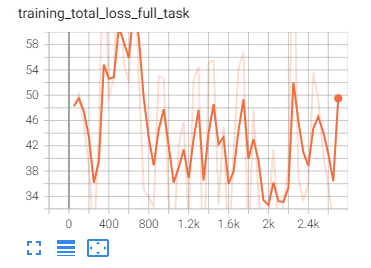
做以下尝试:
-
因为校准指标差的不多,所以认为模型中已不包含量化工具使用问题,首先想到的是调整 lr,weight decay 等许多方法,仍然无法解决这个问题。
-
精度 debug。发现 model.map_head.sparse_head.decoder.gen_sineembed_for_position0.dim_t_quant 在 int16 量化的情况下,敏感度排名靠前,仍然误差较大。
op_name                                                                        sensitive_type    op_type                                                                             L1  quant_dtype
-----------------------------------------------------------------------------  ----------------  --------------------------------------------------------------------------  ----------  -------------
model.map_head.sparse_head.decoder.gen_sineembed_for_position0.dim_t_quant     activation        <class 'horizon_plugin_pytorch.nn.qat.stubs.QuantStub'>                     0.82213     qint16
model.map_head.sparse_head.decoder.gen_sineembed_for_position1.dim_t_quant     activation        <class 'horizon_plugin_pytorch.nn.qat.stubs.QuantStub'>                     0.184159    qint16
model.map_head.sparse_head.pts_branches.0.6                                    activation        <class 'horizon_plugin_pytorch.nn.qat.linear.Linear'>                       0.131423    qint16
model.map_head.sparse_head.decoder.gen_sineembed_for_position2.dim_t_quant     activation        <class 'horizon_plugin_pytorch.nn.qat.stubs.QuantStub'>                     0.111852    qint16
model.map_head.sparse_head.pts_branches.1.6                                    activation        <class 'horizon_plugin_pytorch.nn.qat.linear.Linear'>                       0.0930651   qint16
model.map_head.sparse_head.sigmoid                                             activation        <class 'horizon_plugin_pytorch.nn.qat.segment_lut.SegmentLUT'>              0.0887103   qint16
model.map_head.sparse_head.pts_branches.2.6                                    activation        <class 'horizon_plugin_pytorch.nn.qat.linear.Linear'>                       0.0728263   qint16
model.map_head.sparse_head.reference_points.2                                  activation        <class 'horizon_plugin_pytorch.nn.qat.linear.Linear'>                       0.0689369   qint16
查看逐层比较,量化范围为 32767 * 0.2642754 ≈ 8659.51,虽然数值比较大,但没有明显的截断误差.
+------+-------------------------------------------------------------------------------+-----------------------------------------------------------------------------------+-----------------------------------------------------------------------------+----------------------------------+---------------+------------+------------+-------------+-----------+------------+-------------+-------------+-------------------------------------------------+------------------+-------------------+------------------+-------------------+-------------------+--------------------+------------------+-------------------+-----------------+-------------------+
|      | mod_name                                                                      | base_op_type                                                                      | analy_op_type                                                               | shape                            | quant_dtype   |     qscale |     Cosine |         MSE |        L1 |         KL |        SQNR |        Atol |                                            Rtol |   base_model_min |   analy_model_min |   base_model_max |   analy_model_max |   base_model_mean |   analy_model_mean |   base_model_var |   analy_model_var |   max_atol_diff |   max_qscale_diff |
|------+-------------------------------------------------------------------------------+-----------------------------------------------------------------------------------+-----------------------------------------------------------------------------+----------------------------------+---------------+------------+------------+-------------+-----------+------------+-------------+-------------+-------------------------------------------------+------------------+-------------------+------------------+-------------------+-------------------+--------------------+------------------+-------------------+-----------------+-------------------|
...
| 1296 | model.map_head.sparse_head.decoder.gen_sineembed_for_position0.dim_t_quant    | torch.ao.quantization.stubs.QuantStub                                             | horizon_plugin_pytorch.nn.qat.stubs.QuantStub                               | torch.Size([128])                | qint16        |  0.2642754 |  0.9999999 |   0.0058058 | 0.0670551 |  0.0000000 |  89.0683746 |   0.1328125 |                                       0.0845878 |        1.0000000 |         1.0571015 |     8659.6435547 |      8659.5107422 |      1009.3834229 |       1009.3997803 |  3694867.5000000 |   3694819.5000000 |       0.1328125 |         0.5025535 |
...
打印 dim_t,发现是非均匀分布,对线性量化不友好,在数值较小时会产生较大误差。
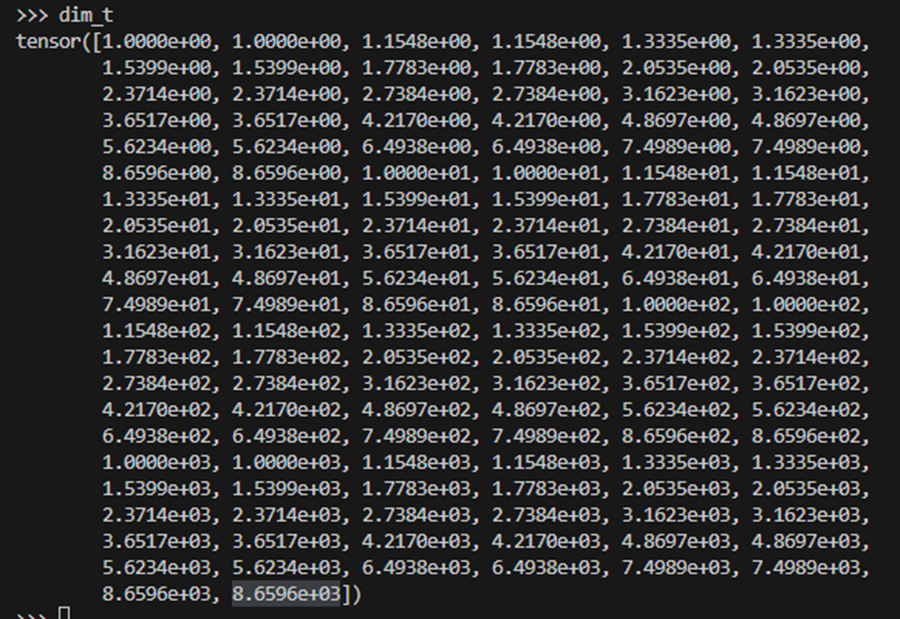
dim_t 是一个除法分母,当 dim_t 较小时,舍入误差会被除法放大。因为 dim_t 是固定的,而且知道前几个小数值的舍入误差影响较大,我们只要将他分成两组量化,在 div 之后再 cat 起来就行,这样就能保证第一组 scale 变小,减小舍入误差。
class PositionEmbedding(torch.nn.Module):
    def forward(self, pos_tensor):
        dim_t = torch.arange(128, dtype=torch.float32, device=pos_tensor.device)
        dim_t = 10000 ** (2 * (dim_t // 2) / 128)
        # dim_t = self.dim_t_quant(dim_t)
        # pos_x = x_embed[:, :, None] / dim_t
        dim_t_1 = dim_t[:32] # 如果调整得更细,32 也可以调大或调小。
        dim_t_2 = dim_t[32:]
        pos_x_1 = x_embed_1[:, :, None] / dim_t_1
        pos_x_2 = x_embed_2[:, :, None] / dim_t_2
        pos_x = torch.cat([pos_x_1, pos_x_2])
此时,再看全 int16 校准和 qat 精度,校准精度有一定提升, qat 精度仍然崩溃。
| 分支 | float | 目标(损失 < 1%) | 全 int16 calibration | 全 int16 qat | finetune float |
|---|---|---|---|---|---|
| 动态 | 73.6 | 72.864 | 73.4 | 0 | 0 |
| 静态 | 55.5 | 54.945 | 54.7 | 0 | 0 |
开始排查训练 pipeline 的问题:
-
使用 qat 流程和训练参数 finetune 浮点模型,并与浮点训练对比,发现 loss 仍然偏大,精度仍然崩溃。
-
将 lr 设置为 0,finetune 仍然精度崩溃,于是定位到问题与 qat 无关,是 qat 训练所使用的代码未与浮点代码对齐。
仔细对比修改记录,解决浮点模型的对齐问题后,再重新进行全 int16 模型的校准和 qat,精度达标。
| 分支 | float | 目标(损失 < 1%) | 全 int16 calibration | 全 int16 qat |
|---|---|---|---|---|
| 动态 | 73.6 | 72.864 | 73.4 | 74.1 |
| 静态 | 55.5 | 54.945 | 54.7 | 55.3 |
#全 INT8 精度调优
因为我们在全 int16 debug 中已经发现有一些比较敏感的算子,在全 int8 调优中可以将这些算子直接设置为 int16(也可以假设没发现保持 int8,在 int8 精度 debug 中也是可以找出来的),其余算子设置为 int8。在这样的量化配置下,校准和 qat 精度都崩溃。
| 分支 | float | 目标(损失 < 1%) | 全 int16 calibration | 全 int16 qat | 全 int8 calibration | 全 int8 qat |
|---|---|---|---|---|---|---|
| 动态 | 73.6 | 72.864 | 73.4 | 74.1 | 0 | 0 |
| 静态 | 55.5 | 54.945 | 54.7 | 55.3 | 0 | 0 |
需要使用 debug 工具分析后增加 int16 算子。
#INT8 / INT16 混合精度调优
按照全 int8 debug 的结果,将前几个敏感度断层式领先的算子设置为 int16。
op_name                                                                                  sensitive_type    op_type                                                                            L1  quant_dtype
---------------------------------------------------------------------------------------  ----------------  --------------------------------------------------------------------------  ---------  -------------
model.view_transformation.ref_point_quant                                                activation        <class 'horizon_plugin_pytorch.nn.qat.stubs.QuantStub'>                     1.79371    qint8
model.map_head.sparse_head.decoder.gen_sineembed_for_position0.dim_t_quant               activation        <class 'horizon_plugin_pytorch.nn.qat.stubs.QuantStub'>                     1.46594    qint8
model.map_head.sparse_head.decoder.reg_branch_output_add0                                activation        <class 'horizon_plugin_pytorch.nn.qat.functional_modules.FloatFunctional'>  0.352401   qint8
model.map_head.sparse_head.decoder.gen_sineembed_for_position1.dim_t_quant               activation        <class 'horizon_plugin_pytorch.nn.qat.stubs.QuantStub'>                     0.246953   qint8
model.view_transformation.transformer.layers.0.linear2                                   activation        <class 'horizon_plugin_pytorch.nn.qat.linear.Linear'>                       0.22353    qint8
model.map_head.sparse_head.decoder.gen_sineembed_for_position2.dim_t_quant               activation        <class 'horizon_plugin_pytorch.nn.qat.stubs.QuantStub'>                     0.214513   qint8
model.map_head.sparse_head.decoder.reg_branch_output_add1                                activation        <class 'horizon_plugin_pytorch.nn.qat.functional_modules.FloatFunctional'>  0.185211   qint8
model.map_head.sparse_head.sigmoid                                                       activation        <class 'horizon_plugin_pytorch.nn.qat.segment_lut.SegmentLUT'>              0.1826     qint8
model.map_head.sparse_head.decoder.gen_sineembed_for_position3.dim_t_quant               activation        <class 'horizon_plugin_pytorch.nn.qat.stubs.QuantStub'>                     0.166937   qint8
最终,使用敏感度 top 0.5% 的算子 int16 ,精度达标。接下来,还可以再精调学习率,weight decay 等参数,在使用更少的 int16 的情况下使得 qat 精度达标。
| 分支 | float | 目标(损失 < 1%) | 全 int8 calibration | 全 int8 qat | int8 + ref_point_quant int16 calibration | int8 + ref_point_quant int16 qat | int8 + 敏感度 top 0.5% int16 calibration | int8 + 敏感度 top 0.5% int16 qat |
|---|---|---|---|---|---|---|---|---|
| 动态 | 73.6 | 72.864 | 0 | 0 | 70.9 | 71.3 | 71 | 73.1 |
| 静态 | 55.5 | 54.945 | 0 | 0 | 7.5 | 27.8 | 53.7 | 55.1 |
#过程回顾
-
优先查看敏感度(与精度掉点相关的输出),看完敏感度再看逐层比较。确定某一算子敏感后,先通过逐层比较或统计量确认造成的误差是舍入误差还是截断误差,然后再针对性的调整量化配置。
-
int8 / int16 调优由敏感度setter完成,只需要设置比例即可,暂时没有太多难度。精度调优的重点应放在全 int16 调优,这里需要把使用问题,量化不友好模块等等各种千奇百怪的问题都解决。
-
全 int16 calib 要有一个没有崩溃的精度。精度崩溃说明有使用问题或者量化不友好,整个过程是不断 debug,按照上面介绍的方法,分析 top 敏感算子,修改量化配置的过程,直到有一个不崩溃的精度为止。有些修改并不会立即反映出有精度上的提升,但应该能观察到修改相关的算子敏感度变低了。