

常见问题
Docker 容器中无法 import hat?
若您在 GPU Docker 中运行示例提示 GPU RuntimeError,或者加载 hat 出现 ModuleNotFoundError: No module named 'hat'、Segmentation fault (core dumped) 等类似报错,那么可以按照如下两个方向进行排查:
- 使用 OE 包中提供的 run_docker.sh 脚本启动 GPU Docker 容器;
- 在容器中执行如下脚本来检测 torch 和 cuda 是否正常。若 CUDA 无法调用,可以使用 nvidia-smi 检查下驱动版本是否符合要求。因为 OE 包自 v1.1.60 版本开始,升级了 torch 环境为 1.1.30+cu116,对应的驱动要求可见:环境部署 - Docker容器部署。
如何找到 config 文件中模块的具体实现?
模块对应的实现为 type 对应的 value,可将 type 值理解为 class,在 build model 时会实例化该类, 类的路径可通过以下两种方式获取:
- 各模块的具体实现存放在
hat/models/模块名/,也可以在init.py中查看该路径下是否包含该 class, 例如:在 bev_mt_ipm 模型的配置文件中,neck 的dict["type"]为"FastSCNNNeck", 则 FastSCNNNeck 的实现在hat/models/necks/fast_scnn.py; 另外,特定 task 的模块定义会在task_modules下(head,后处理,decoder), 例如:检测分支的 head 配置项为"CenterPoint3dHead",是 task_modules 包含部分, 则其实现在hat/models/task_modules/centerpoint3d/head.py; - 使用 grep 命令查找,例如:
为什么 config 能正常打印,但 launch trainer 失败?
例如,以下报错需要修改 config 中的 device_ids 为当前可使用的 GPU 资源;若报错包含 “CUDA out of memory”,则需修改 batch_size_per_gpu 为当前资源能支持的 batch size。
为什么配置 data 运行的 device 不生效?
请在 hat/engine/processors/processor.py 中检查 to_cuda 是否成功, 不成功可能是因为 data 不是 tensor 类型导致未调用起 device。
为什么配置 trainer 的运行 device 不生效?
device 和 device_id 配置有优先级:如果使用默认的 train.py 的 launch 来调用的 trainer, 那么只有 device-ids 是起作用的,device 配置不会起作用。 如果是直接调用的 trainer(predictor,loop base等),device 可以直接起作用。
如何设置验证/打印频率?
在 config 文件中有关于 callback 频率的参数,验证频率可以通过以下方式修改,其他 callback 相关频率都以 “xxx_frep” 形式设置:
为什么 plt.show 图像不显示?
可能是由于当前 Linux 系统无图形界面导致,可以在 hat/visualize 路径下各数据集对应代码中添加 plt.savefig('./test.png',dpi=300),保存在本地后再查看。
如何 new dataset?
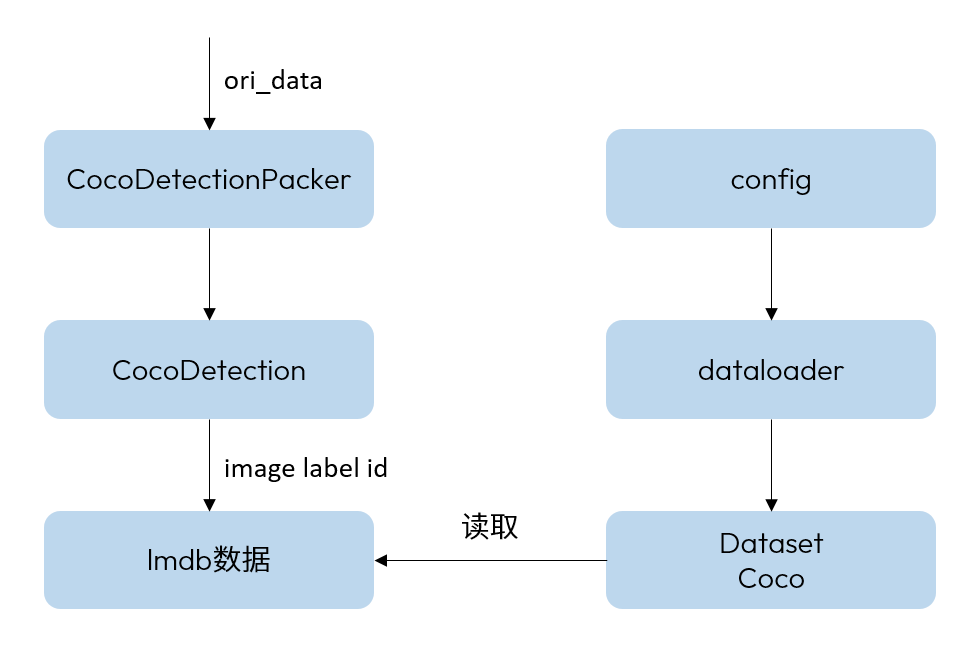
dataloader 内部类调用流程图如下所示(以 Coco 数据集为例),其中所有类和接口都在config中调用, 数据加载通过调用 dataloader 实现,dataloader 加载的数据集 dataset 由 Coco 类返回,Coco 类读取的是lmdb 格式的打包数据,该数据通过调用 packer 接口实现,实现流程:packer 调用 CocoDetectionPacker 类将 CocoDetection 返回的数据(image,label…)打包成设置的格式(lmdb,mxrecord)。
实现一个 dataset 需要对以上涉及的类重写,根据数据集的 format(也可将数据集的 format 调整为原 dataset 的格式)重写 __getitem()__ 。
如何恢复意外中断的训练?
可以通过在 config 的 {stage}_trainer 中配置 resume_optimizer 和 resume_epoch_or_step 字段来恢复意外中断的训练,或仅恢复 optimizer 来进行 fine-tune, 例如在 config 文件的 trainer 中增加以下字段:
如何可视化模型结构?
支持 hb_model_info 工具通过 -v 参数可视化 ;也可参考:如何可视化地平线的参考算法模型结构。
如何修改 calibration 的方法?
可以修改 config 中的 calibration_trainer 字段,新增 qconfig_params 字典,参考如下:
DETR模型是否支持 deformable conv?
该算子主要在 deformable-DETR 中的 deformable attention 结构中使用,地平线还暂不支持,但可以使用已经支持的 gridsample 算子进行替代。
在BEV 模型中,为什么 Lss 的精度低于 IPM?
Lss 的输入分辨率是 256x704,低于 IPM 的 512x960,所以精度更低。
BEV 模型中的 Lss 输入的约束条件是什么?
Lss 在 grid_sample 前会做维度折叠,所以对 input_feature 的 h、w 有算子编译的约束条件,目前为:H,W ∈ [1, 1024] 且 H*W ≤ 720*1024。
如何解决BEV 模型中 Lss 的 mul(depth,feature) 耗时大?
可以先通过 grid_sample 算子将 featuremap 的 H、W 转换为 [128,128] 后再做 mul 计算。
BEV 模型中 Lss 的 voxelpooling 如何实现?选取多少个点?
为了不遗失坐落在相同 voxel 中的点云特征,我们会对每个 voxel 采样 10 次, 并将每个点云特征相加得到 128x128x64 的 BEV 特征图,对应代码如下:
BEV 模型的 Lss 如何选择参考点?
point 的生成在 _gen_reference_point,会将 feature 范围外的无效点置为较大的值。为了不取到无效点,会使用 topk(k=10,训练速度较快)将取值较小的前 10 个点进行集合。
BEV 模型的 Lss 如何处理 gridsample 输入较大的情况?
Lss 模型因为会在 gridsample 算子前将 3 个维度折叠为 1 个维度,因此其 H*W 容易超出 720*1024 的 BPU 算子约束限制。此时建议在维度折叠(即 dfeat = dfeat.view(B, 1, -1, H * W))前,先对可能超限的维度进行拆分,分别计算 gridsample,最后再将结果叠加。
为什么 BEV 模型的 gkt 精度指标较低?有什么优势?
基于 Transformer 的 gkt 精度低于 IPM 的主要原因是开源数据集的数据量不够,我们尝试加入一些业务数据后可以高于 IPM 的精度。而且 gkt 模型的鲁棒性更好,能够解决相机偏移导致的精度影响。
BEV 模型中 gkt 的 transfomer 是否是 global 的?
不是 global 的,选取的是 kernel(3x3) 的 feature 做注意力,因此是 kernel-transformer。
BEV 模型是否支持公版 bevformer?
J6已支持优化版bevformer。
BEV模型检测和分割任务之间是否会制约精度?
会有影响,多任务中的检测任务精度会有所下降,需要通过训练策略做平衡。
PointPillars 模型的 latency 包括哪几部分?
Pointpillars 目前的 latency包含两部分:前一部分为前处理(voxel化),即点云输入后到 head 的时间;后一部分为后处理时间。
点云量对 PointPillars 模型性能影响如何?
有效点云数越多则前处理耗时越长,具体到配置项为 Voxelization cfg 参数组:
PointPillars 模型的前处理包含哪些操作?
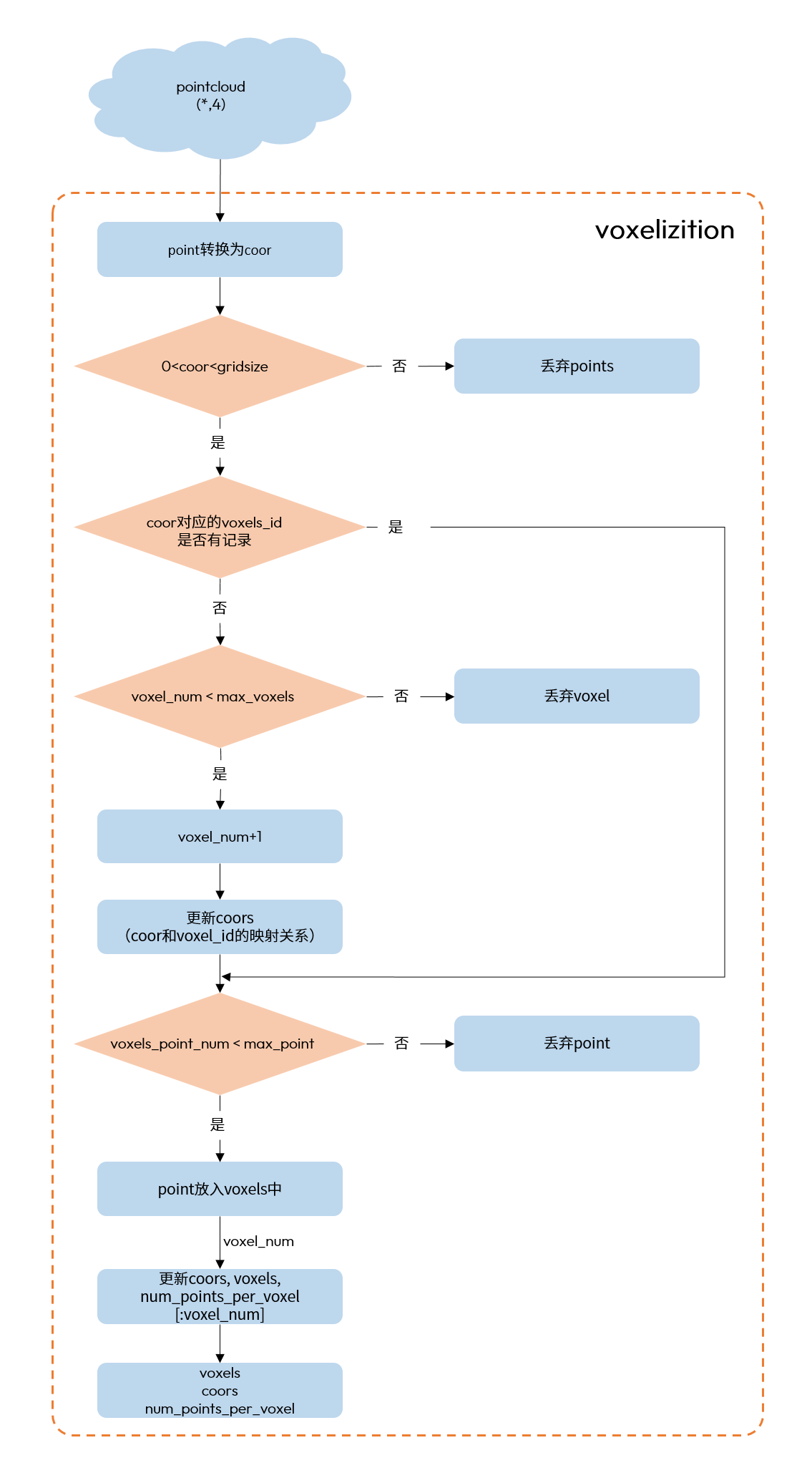
前处理为 pillar(voxel)化,对应阶段为 voxeliza tation,流程示意图如下所示:
PointPillars 模型支持几类任务检测?如何扩展?
目前 PointPillars_Kitti_Car 模型只支持 car 一类检测,另外我们也提供了多类别检测模型 centerpoint_pointpillar_nuscenes。
PointPillars 的板端 hbm 模型的输入数据如何生成?如何预处理?
数据预处理包括 reshape 和 padding(padding 至(1,1,150000,4),其中 150000 为 bin 文件中的最大点云量),参考代码如下所示:
为什么 PointPillars 模型的板端 perf 数据与官方指标不一致?
在板端使用 hrt_model_exec perf 工具评估性能时请指定真实的 input_file,否则工具会采用随机生成的点云数据,可能导致 perf 指标不准确。
PointPillars 模型中,PTQ 方案是否支持对 Lidar 模型转换?
功能链路上是支持的,可以从训练框架中导出 ONNX 模型进行 PTQ 转换检查。 但是从既有经验看,Lidar 点云模型走 PTQ 方案量化的精度风险较大,主要原因包括:点云比较稀疏,数据分布情况对量化不友好等。
centerpoint 和 pointpillars 能否互用?
两个模型可以互用,只需要对应修改数据集所涉及的相关配置,例如:点云范围、预测类别,以及后处理的 anchor、target 等,详情说明可见该技术贴 centerpoint使用kitti数据集过滤后数据集没了 的评论区中的config示例。